Indonesia’s traditional skincare practices, rooted in centuries-old herbal wisdom, are experiencing a resurgence as modern consumers seek natural, chemical-free alternatives for beauty and wellness. These methods, which include lulur rempah, jamu ramuan, and organic face masks, have been passed down through generations, particularly in Java, Bali, and Sumatra, where they remain integral to cultural rituals. Recent studies, including a 2023 report by the Indonesian Ministry of Health, indicate that 65% of women in rural areas still rely on herbal skincare for daily maintenance, citing affordability and accessibility as key factors. The global organic beauty market, projected to reach $25.1 billion by 2025, has further amplified interest in Indonesia’s indigenous ingredients, such as turmeric, bengkoang, and rice bran, which are now being scientifically validated for their dermatological benefits.
The Historical Foundations of Indonesian Herbal Skincare
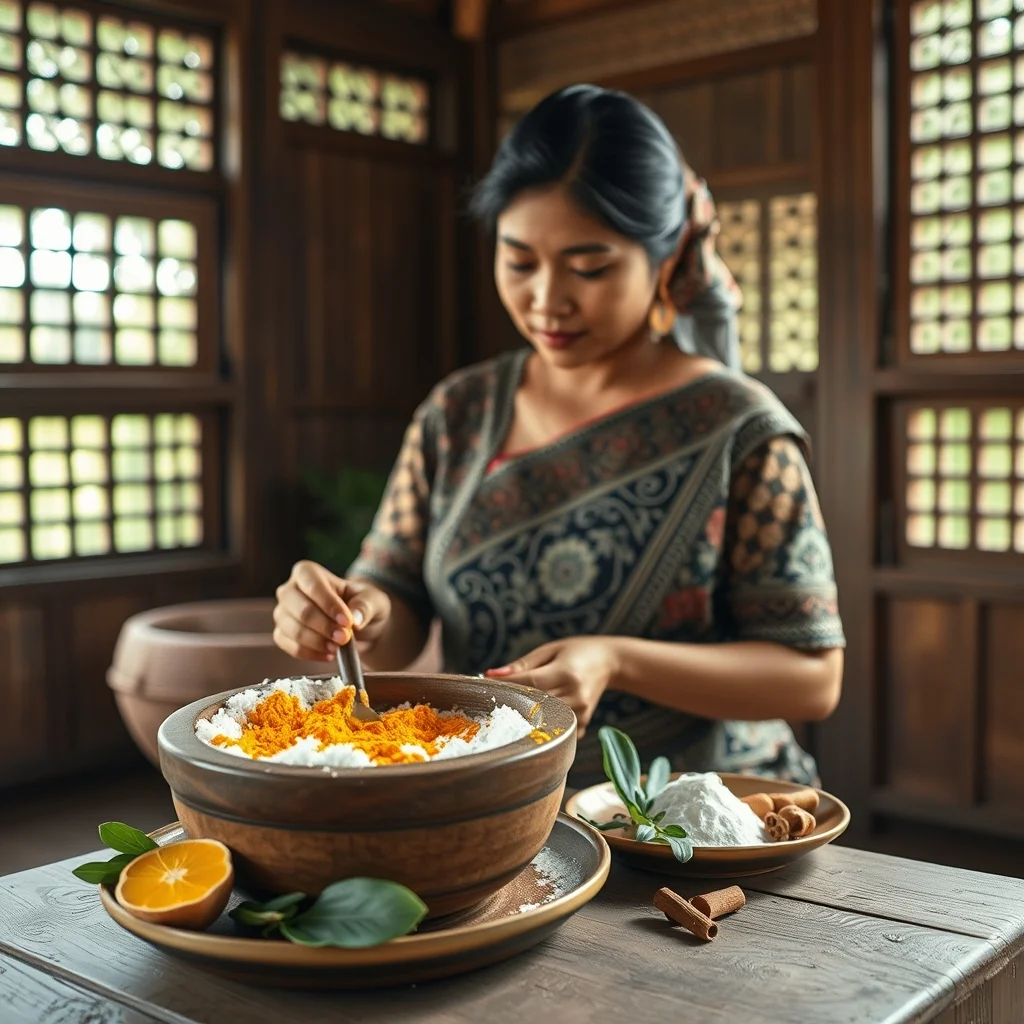
Traditional Indonesian skincare traces its origins to the archipelago’s pre-colonial era, where royal courts and village communities developed elaborate beauty rituals using locally sourced botanicals. The Javanese lulur, a body scrub made from turmeric, rice flour, and aromatic spices, was historically used by brides in the 15th-century Majapahit Kingdom to achieve a radiant complexion before wedding ceremonies. Similarly, the Balinese boreh, a paste of sandalwood and pandan leaves, was applied during religious ceremonies to purify the skin. These practices were not merely cosmetic but also held spiritual significance, symbolizing inner harmony and respect for nature.
Documentary evidence from the 17th-century Dutch colonial records, such as the Hikayat Banjar, describes the use of jamu,herbal concoctions,for both medicinal and aesthetic purposes. The term “jamu” itself derives from the Old Javanese words “jampi” (healing) and “usada” (treatment), reflecting its dual role in health and beauty. By the 19th century, jamu had evolved into a structured system, with recipes meticulously recorded in palm-leaf manuscripts known as lontar.
The Science Behind Traditional Ingredients
Modern dermatological research has begun to substantiate the efficacy of Indonesia’s traditional skincare ingredients. Turmeric (Curcuma longa), a staple in lulur and face masks, contains curcumin, a compound with anti-inflammatory and antioxidant properties that reduce acne and hyperpigmentation. A 2022 study published in the Journal of Cosmetic Dermatology found that turmeric-based formulations improved skin elasticity by 15% over an eight-week period. Similarly, bengkoang (Pachyrhizus erosus), a tuber rich in vitamin C and enzymes, has been shown to inhibit melanin production, making it a natural alternative to chemical brightening agents.
Rice bran, another key ingredient in traditional masks, contains ferulic acid and gamma-oryzanol, which protect against UV-induced skin damage. A 2021 clinical trial conducted by the University of Indonesia’s Faculty of Medicine demonstrated that rice bran extract increased skin hydration levels by 22% in participants with dry skin. These findings align with the observations of Dr. Retno Iswari Tranggono, a leading dermatologist and researcher, who stated, “Indigenous ingredients like turmeric and bengkoang are not only culturally significant but also biologically active, offering measurable benefits for skin health.”
Regional Variations and Cultural Practices
Indonesia’s diverse geography has given rise to distinct regional skincare traditions. In Central Java, the lulur Jawa klasik remains a cornerstone of bridal preparations, often incorporating cloves, cinnamon, and jasmine for their aromatic and antiseptic properties. The process, which involves exfoliating the skin with a paste of these ingredients, is typically performed over three consecutive days to achieve a luminous glow. In contrast, the Minangkabau people of West Sumatra utilize a scrub made from finely ground coffee and coconut oil to treat body acne and improve circulation.
In Bali, the boreh is traditionally applied during the Melukat ritual, a purification ceremony held at sacred water temples. The paste, made from rice flour, turmeric, and galangal, is believed to cleanse both the physical and spiritual body. Meanwhile, in the highlands of Papua, communities use extracts from the Pandanus conoideus fruit, known locally as “buah merah,” to treat eczema and psoriasis. These regional variations underscore the adaptability of traditional skincare to local ecosystems and cultural beliefs.
Challenges and Modern Adaptations
Despite their proven benefits, traditional skincare practices face challenges in standardization and commercialization. Many recipes are transmitted orally, leading to variations in preparation and efficacy. Additionally, the lack of regulatory oversight has resulted in the proliferation of counterfeit or adulterated products in the market. To address these issues, the Indonesian government launched the Jamu Saintifikasi program in 2010, which aims to scientifically validate and standardize traditional herbal remedies. As of 2023, 15 jamu formulations have received official recognition, including those for skincare applications.
Contemporary beauty brands are also incorporating traditional ingredients into modern formulations. For example, the Jakarta-based company Sariayu has developed a line of lulur-inspired body scrubs using organic turmeric and rice bran, which are now exported to over 20 countries. Similarly, Mustika Ratu, a heritage brand established in 1975, offers a range of jamu-based skincare products that combine traditional recipes with advanced extraction techniques. According to the company’s founder, Martha Tilaar, “The key to preserving our heritage lies in innovation,bridging the gap between ancient wisdom and modern science.”
As global demand for natural skincare continues to grow, Indonesia’s traditional beauty rituals are poised to play a pivotal role in shaping the future of the industry. With ongoing research and increased awareness, these time-honored practices are not only being preserved but also redefined for a new generation of consumers seeking authenticity, sustainability, and efficacy in their beauty routines.
You may also like
-
Complete Guide to Choosing the Best Sunscreen for Your Skin Type
-
Bare Minimum Beauty: Simplify Your Routine Without Sacrificing Glow
-
2024 Pediatric Skin Care Alert: How to Safeguard Newborns from Common Dermatological Risks Using Clinically Validated Methods
-
Bare Minimum Beauty 2024: Indonesia’s Top Dupe Makeup and Skincare Picks That Deliver High-End Results at Budget Prices,Expert-Backed Affordable Alternatives for Every Routine
-
Indonesia’s Traditional Herbal Skincare: The Proven Benefits of Lulur, Jamu, and Organic Remedies in Modern Dermatological Practices